Blog
Peptide blends vs Single peptides
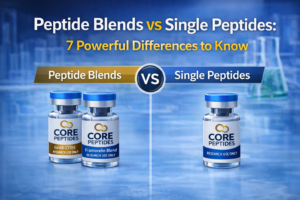
Peptide Blends vs Single Peptides: 7 Powerful Differences to Know
Peptide blends vs single peptides is one of the most useful comparisons for readers who want to understand how a peptide catalog is organized. This guide explains the difference in a simple, educational way so visitors can browse more confidently, compare categories more clearly, and move more easily between product sections on Core Peptide USA. The site publicly separates its main peptide category from its blends section, alongside About and Contact pages, which makes this comparison especially useful for first-time visitors.
If you are new to the site, this article can help you understand why some listings appear as standalone compounds while others are grouped together on a dedicated blends page.
Table of Contents
- What are peptide blends and single peptides?
- Why this comparison matters
- 7 powerful differences to know
- When readers browse single peptides first
- When readers explore blends first
- How Core Peptide USA organizes both categories
- Frequently asked questions
- Final thoughts
What Are Peptide Blends and Single Peptides?
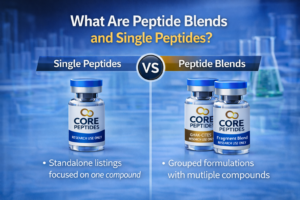
Single peptides are standalone listings that focus on one compound at a time. These usually fit naturally into a broader peptide category where readers can browse individual products more easily.
Peptide blends are grouped formulations collected in a dedicated section. Instead of highlighting one standalone listing, this category brings together grouped options in one place for easier comparison.
For general scientific background, readers can review this peptide structure overview, which explains the basics of peptides and peptide bonds.
On Core Peptide USA, a reader can start from the homepage, move into the Peptides section for individual listings, or browse the Blends section for grouped formulations.
Why This Comparison Matters
Understanding blends compared with standalone peptides makes site navigation much easier.
Instead of guessing where a product type may be located, readers can choose the most relevant section first. That saves time and improves the overall browsing experience.
This comparison also helps content structure. A good educational article should show readers how to move from category-level information into deeper pages such as product listings, company pages, and support pages.
That is why this topic works well in a blog. It supports both clarity and internal linking.
7 Powerful Differences to Know
1. Single peptides focus on one compound
Standalone peptide listings usually center on one product at a time. This makes them easier to browse when a visitor wants a more direct category path.
2. Blends group formulations together
Blends are collected in their own section, which helps users compare grouped options without sorting through every single-compound listing first.
3. Single peptides are often easier for broad category browsing
If a reader wants a simple starting point, the Peptides page is often the cleaner route because it works as a broader category hub.
4. Blends are useful for grouped-option comparisons
If a visitor wants to review combination-style listings, the Blends page is the better place to begin.
5. The two categories support different content angles
Individual peptide listings work well with compound-specific educational posts. Blend pages work well with grouped comparisons and broader category guides.
6. Internal links should connect both categories
A useful site experience does not isolate one category from the other. Readers should be able to move naturally between the homepage, category pages, support pages, and deeper listings.
For example, a reader might begin on Core Peptide USA, browse Peptides, compare grouped options in Blends, then visit the About page or the Contact page. The site exposes those pages in its public navigation structure.
7. The best browsing path depends on user intent
Some visitors prefer to start with single-compound listings. Others want grouped formulations first. The right choice depends on what they want to compare.
Peptide Blends vs Single Peptides in Practical Browsing
A simple way to understand this topic is to think in terms of browsing paths.
If you want a broad look at individual listings, start with the Peptides section.
If you want grouped formulations collected in one place, start with the Blends page.
If you want to learn more about the company before browsing more deeply, visit the About Core Peptide USA page. If you need support or business information, use the Contact Core Peptide USA page.
When Readers Browse Single Peptides First
Readers often start with standalone peptide listings when they want:
- a simpler category path
- one-compound listings
- a broad peptide overview
- direct movement from category page to product page
This path is helpful for users who prefer a cleaner starting point before moving into deeper comparisons.
When Readers Explore Blends First
Readers may prefer blend pages first when they want:
- grouped formulations
- category-specific browsing
- quicker comparison of grouped options
- a dedicated section separate from broader peptide listings
This path works best for users who already know they want to compare grouped formulations rather than browsing individual products first.
How Core Peptide USA Organizes Both Categories
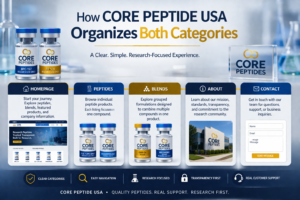
Core Peptide USA gives readers a clear structure for browsing.
A visitor can start on the homepage, move into the main peptide category, explore grouped formulations in the blends section, and then continue into support pages like About and Contact.
That makes this article useful as a bridge between educational search intent and actual category navigation.
Frequently Asked Questions
What is the difference between peptide blends and single peptides?
Single peptides focus on one standalone listing at a time, while blends group formulations together under a dedicated category.
Where can I browse single peptides on Core Peptide USA?
You can start with the Peptides page.
Where can I explore grouped formulations?
You can browse grouped options through the Blends page.
Why is this a useful blog topic?
It helps readers understand category structure, compare browsing paths, and navigate the site more efficiently.
Should a comparison post include internal links?
Yes. A strong comparison post should connect readers to the homepage, main categories, support pages, and related educational content.
Where can I learn more about the company?
You can review the About Core Peptide USA page or reach out through the Contact Core Peptide USA page.
Final Thoughts
Peptide blends vs single peptides is an important comparison for beginners because it explains how a peptide catalog is structured and how readers can choose the right browsing path.
To continue exploring, start from the Core Peptide USA homepage, browse the Peptides category for individual listings, compare grouped options in Blends, learn more on the About page, or use the Contact page for support.
Disclaimer
This article is provided for general informational and research-reference purposes only. It is not medical advice and is not intended to diagnose, treat, cure, or prevent any disease. Any peptide-related content on this page should be understood in an educational, catalog, and site-navigation context only.
