
Blog
What Are Research Peptides?
Research Peptides Explained: 7 Powerful Facts for a Smart Start
Research peptides are a major topic for readers who want a clearer understanding of peptide categories, peptide blends, and how to navigate a research-focused catalog. This guide explains the basics in a simple, structured way so visitors can better understand what research peptides are, how they are commonly grouped, and how to explore related sections on Core Peptide USA.
If you are new to peptide-related content, this article will help you start with the essentials before moving into broader category pages, blend pages, or specific product listings.
Table of Contents
- What are research peptides?
- Why research peptides matter in educational content
- 7 powerful facts about research peptides
- Research peptides vs peptide blends
- How research peptides are commonly organized
- How to browse research peptides on Core Peptide USA
- Frequently asked questions
- Final thoughts
What Are Research Peptides?
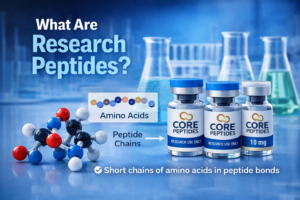
Research peptides are peptides discussed, cataloged, and organized in research-oriented environments and educational content. In simple terms, peptides are short chains of amino acids linked by peptide bonds, and they are widely studied in biochemistry and related scientific fields. For general background on peptide structure, readers can review the NCBI overview of peptides and peptide structure and the PubChem peptide reference.
For website visitors, the phrase “research peptides” usually appears as a category term that helps organize products, product pages, and related educational resources. On Core Peptide USA, visitors can move from the homepage into the main Peptides and Blends sections, then continue into supporting pages like About Core Peptides USA and Contact Core Peptides.
Why Research Peptides Matter in Educational Content
Research peptides matter because they help organize peptide-related information into clearer categories for readers. Instead of placing every topic on one page, a structured site can separate individual peptides, peptide blends, brand pages, support pages, and product listings.
This makes it easier for readers to:
- understand the difference between broader categories and specific listings
- compare peptide blends with individual products
- move from educational content into relevant internal pages
- find company information and support pages more quickly
A strong educational article also supports internal linking, readability, and topical relevance. That is why blog posts about research peptides can strengthen both user experience and on-page SEO when they are written clearly and linked naturally.
7 Powerful Facts About Research Peptides
1. Research peptides are a broad educational category
The phrase research peptides is broad. It can include educational guides, category pages, product listings, FAQs, and comparison-style articles. Because the topic is broad, it works well as an entry-level blog subject for new visitors.
2. Research peptides are different from peptide blends
Not all peptide-related pages are the same. Some pages focus on individual compounds, while others focus on grouped formulations. If you want to compare these sections directly, it helps to review both the main research peptides category and the peptide blends page.
3. Research peptides support cleaner site structure
A well-organized research peptides page helps connect category pages, featured products, supporting company pages, and educational content. This is useful for readers and also strengthens the relationship between important pages across the website.
4. Research peptides are easier to understand when grouped clearly
Readers usually prefer a catalog that separates broad categories from specific listings. For example, it is easier to browse a general peptide section first, then move into a more specific product page only after understanding the broader context.
5. Research peptides benefit from internal linking
A strong article about research peptides should link naturally to helpful internal pages. For example, readers can start at Core Peptide USA, explore the Peptides section, compare options in Blends, learn more on the About page, or reach out through the Contact page.
6. Research peptides work well with FAQ-style content
Readers often search in question form. That is why research peptides articles perform better when they include direct answers, short paragraphs, and helpful subheadings. FAQ sections also make the content easier to scan and more useful for beginners.
7. Research peptides should be explained in a clear, research-focused tone
The best research peptides articles stay educational, neutral, and easy to follow. A clear tone helps visitors understand the topic without turning the article into a hard-sell page. This is especially useful for building trust and guiding readers toward the right section of a peptide website.
Research Peptides vs Peptide Blends
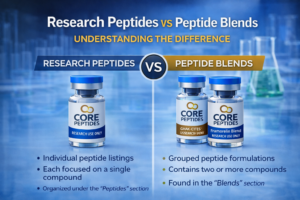
One of the most common points of confusion is the difference between research peptides and peptide blends.
In simple site-navigation terms:
- Research peptides often refer to the broader category of peptide-related listings and educational content.
- Peptide blends usually refer to grouped formulations displayed in their own dedicated section.
That is why it helps to browse both the Peptides page and the Blends page when learning how a catalog is organized. If you want more brand background before exploring those sections, you can also visit About Core Peptides USA.
This internal path gives readers a clearer way to move from education into navigation.
How Research Peptides Are Commonly Organized
A clean research peptides website usually organizes content into a few core sections:
Category Pages
These help readers browse broad peptide-related topics and product groupings.
Product Listings
These pages focus on specific items and more detailed product information.
Blend Pages
These pages group combination-style listings in one place.
Informational Pages
These include brand, support, and educational content such as About, Contact, and blog posts.
When those sections are connected properly, visitors can move through the site more easily. On Core Peptide USA, those main navigation paths are already visible through the homepage, category pages, and support pages.
How to Browse Research Peptides on Core Peptide USA
If you are trying to understand research peptides through the structure of the website, a simple path is:
- Start on the Core Peptide USA homepage
- Move into the main Peptides section
- Compare related options in the Blends section
- Read the About Core Peptides USA page for brand context
- Use the Contact Core Peptides page for support or business questions
This type of internal journey makes a research peptides article much more useful because it does not stop at basic definitions. It helps the reader continue exploring the site in a logical way.
Frequently Asked Questions About Research Peptides
What are research peptides?
Research peptides are peptide-related compounds, categories, and educational topics commonly presented in research-oriented content and catalog structures.
Why is “research peptides” a useful keyword?
The term research peptides is useful because it is broad, beginner-friendly, and closely connected to category navigation, educational content, and internal linking.
What is the difference between research peptides and peptide blends?
In general website structure, research peptides refers to the broader peptide category, while peptide blends usually refers to grouped formulations collected on a separate page.
Where can I browse research peptides on Core Peptide USA?
You can start with the homepage, then browse the Peptides page and the Blends page.
Where can I learn more about the company?
You can visit the About Core Peptides USA page or use the Contact Core Peptides page for support-related questions.
Why should a blog post about research peptides include internal links?
Internal links improve navigation, keep readers on the site longer, and help connect educational content with category and support pages.
Final Thoughts on Research Peptides
Research peptides are one of the best starting points for readers who want a simple introduction to peptide-related categories and site navigation. A strong beginner article should explain the topic clearly, use short paragraphs, include internal links, and guide readers toward the most relevant sections of the website.
To continue exploring, visit the Core Peptide USA homepage, browse the main Peptides section, compare options in Blends, learn more on the About page, or reach out through the Contact page.
Disclaimer
This article is provided for general informational and research-reference purposes only. It is not medical advice and is not intended to diagnose, treat, cure, or prevent any disease. Any peptide-related content on this page should be understood in an educational, catalog, and site-navigation context only.
